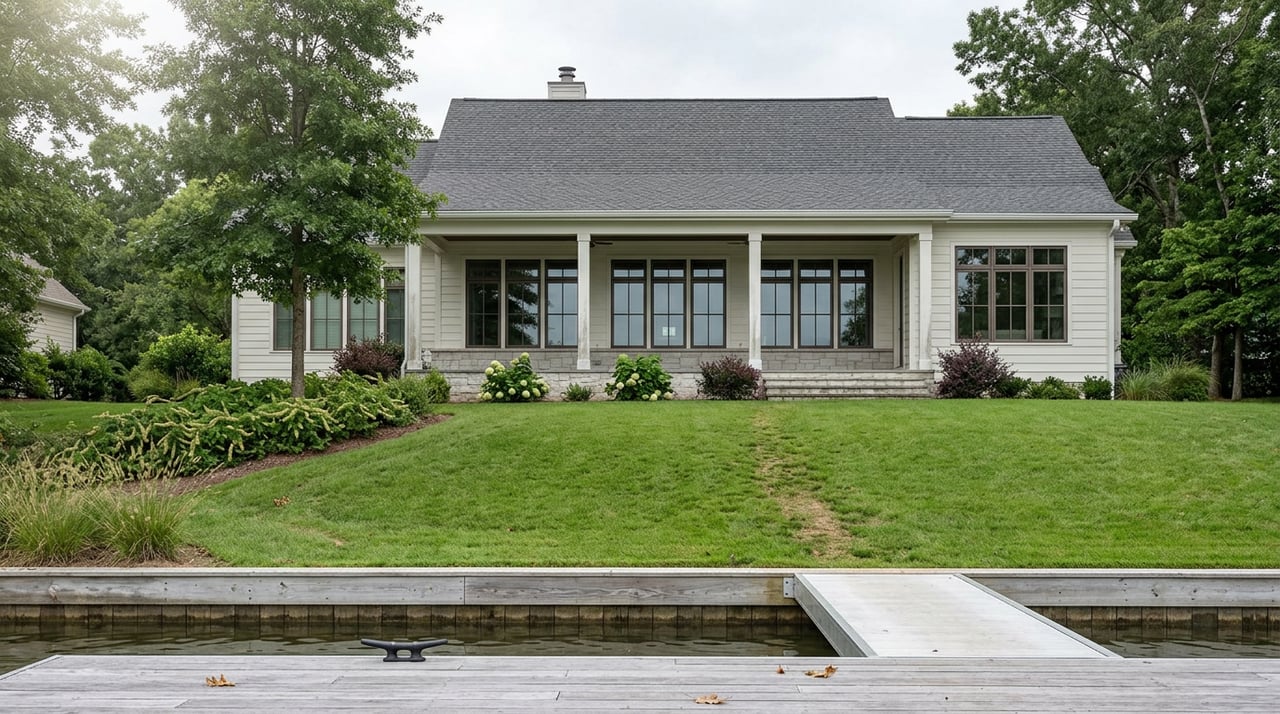
Picture a typical Sisters Cove closing headed toward a good outcome. The survey comes back clean. The inspector flags a slow drain and a few loose deck boards, nothing that changes the number on the contract. Everyone circles a date. Then the buyer's agent picks up the phone to confirm one more thing: the dock permit. That call is where things stall, because the metal tag bolted to a piling on the dock and the name on file with Duke Energy are two different pieces of information, and in Sisters Cove more than most Lake Norman neighborhoods, they are more likely to disagree.
That gap, not the house, is the real risk in a Sisters Cove waterfront sale right now.
Why Sisters Cove sees this more than most neighborhoods
Lake Norman docks are not part of the house the way a roof or a driveway is. They sit on land Duke Energy owns down to the full pond elevation, and every dock, pier, or lift on that land exists because Duke Energy approved it, not because whoever owns the lot happened to build it. That approval is tracked separately from the deed, through Duke's Lake Access Permit System, and it stays registered to whoever last filed it, whether or not that person still owns the property.
Sisters Cove has spent years selling not just finished homes but waterfront lots with docks already in place. More than one lot in the neighborhood has gone to market as vacant land already fitted with a private dock, sold with the expectation that a home would follow later, sometimes years later. That sequence, dock first and house second, means the person who built the dock and the person who eventually lists the finished home are often not the same owner. The permit paperwork does not always follow the deed from one to the next as cleanly as it would in a neighborhood where every dock was built by the person selling the house today.
What the permit transfer actually checks
Duke Energy's Lake Services group does not treat a change of ownership as a formality. When a new owner submits a transfer application, a Lake Services representative inspects the structure in person to confirm it matches what was originally permitted and has not been modified without approval. If the dock has picked up an extra slip, a covered section, or a longer walkway since the last approval, that inspection is where it surfaces, and it tends to surface during someone else's due diligence window rather than on a schedule the seller controls.
What a buyer's agent, or Duke Energy itself, will typically want to see before treating a Sisters Cove dock as settled:
- The Duke Energy permit number and the metal tag on the structure itself
- Confirmation the permit is currently registered to the seller, not a prior owner
- Documentation of any changes made to the dock since it was originally permitted
- A recent survey or plat showing the dock's position relative to the property line and any recorded easements
If a seller cannot produce that documentation, the sale does not fall apart. What happens instead is that the fix, whether that means paperwork, a modification permit, or in rare cases bringing an unapproved addition into compliance, becomes the responsibility of whoever is on record as the owner when Duke Energy's inspector shows up. Under Duke's process, that is usually the new owner, not the seller who built the addition years earlier.
The rule that just changed the math
Duke Energy is closing this loophole from the other direction. Effective July 1, 2026, the company stopped reviewing private dock applications on lots where no home has been built, a change that applies across every Duke Energy lake, Lake Norman included. Shoreline stabilization requests are unaffected, but the specific pattern that shaped Sisters Cove's early lots, a dock permitted and installed before a house existed on the parcel, is no longer an option for new construction going forward.
That does not undo permits already issued to existing docks in Sisters Cove. It does mean that any comparison to how things have always worked in this neighborhood no longer applies to lots still being built out, and it puts a harder deadline on getting existing dock-first permits correctly registered before they turn into a closing-week discovery instead of a routine step handled months in advance.
What this means at Sisters Cove price points
Over the past two years, single family homes in Sisters Cove have sold for between $880,000 and $2.25 million, with a median of 52 days on the market. Most of the homes behind those numbers were built between 2015 and 2023, run 2,400 to 5,800 square feet, and sit on lots averaging around a third of an acre. None of that price range is a level where a dock issue is a rounding error. A lender relying on the dock as part of an appraised value, or an insurer pricing coverage around it, is looking at the same permit status a buyer's agent is, and an unresolved compliance question can slow financing as easily as it slows a closing date.
North Carolina also requires most sellers of one to four unit residential property to provide a Residential Property Disclosure Statement before a buyer makes an offer. That statement does not require a seller to already have every answer about a dock's permit history, but it does put the seller in the position of representing in writing what they do and do not know about the property, which is exactly the kind of question a permit gap turns into a harder conversation than it needed to be.
A dock that has sat on a Sisters Cove shoreline for years without incident is not the same thing as a dock currently permitted in the seller's name. Only Duke Energy's records answer the second question.
Before you list
A seller who checks this before signing a listing agreement controls the timeline. A seller who waits for a buyer's agent to ask is negotiating from behind. The practical order of operations:
- Locate the Duke Energy permit number and tag on the dock itself
- Confirm directly with Duke Energy Lake Services whether that permit is currently registered in your name
- If it is not, start the transfer application now, while there is no contract deadline pushing the timeline
- Pull together any records of changes made to the dock since it was last permitted, including who made them and when
- Have a current survey or plat on hand showing the dock's position relative to the property line
None of this requires assuming the worst about a Sisters Cove dock. Most are fine. The point is that fine is a status Duke Energy confirms, not one that comes automatically with the house.
FAQ
Does Iredell County or the Sisters Cove HOA handle dock permits instead of Duke Energy? No. Duke Energy's Shoreline Management Program controls dock approvals on Lake Norman regardless of which county the property sits in. County building permits can apply on top of Duke's approval, for things like electrical work on a lift, but they do not replace it.
What if I never received a permit letter or the metal tag fell off my dock? That happens, and it does not necessarily mean the dock was never permitted. Duke Energy Lake Services can look up the property and issue a duplicate letter or replacement tag once ownership and the original permit history are confirmed.
Does this apply to homes with access to a community slip instead of a private dock? Community docks and shared slip systems are also permitted structures under Duke Energy's program, typically registered to the HOA or the entity that built them rather than to an individual homeowner. It is still worth confirming that the community structure's permit is current, since a compliance issue there can affect every household with access to it.
If you are weighing when to list a waterfront home in Sisters Cove, the dock's paperwork is worth resolving before the sign goes in the yard, not after an offer arrives. Zach Francis has worked the Lake Norman shoreline since 2006 and can walk you through what a Duke Energy permit check looks like for your specific dock before it becomes someone else's discovery. Let's Connect.